South America 2016

Where we are going

So here is the rough plan:

Fly to Santiago (via Auckland)
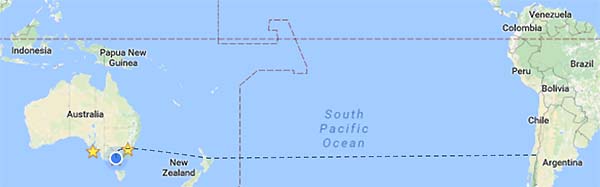
aus-chile

Enjoy Santiago whilst recovering, then on to Cusco and Maccu Picchu (actually I think we go to Cusco via Lima… ignore the dashed line on the map).
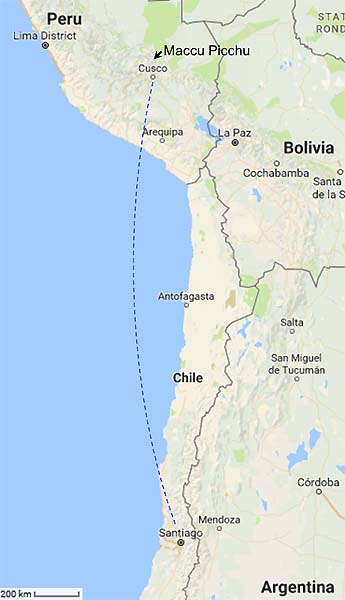
then back to Santiago, before returning to Australia.

Posted in Uncategorized | Comments Off on Where we are going

2016-08-30 Melbourne to Santiago

Time to go. Up at 5am, shower, breakfast, last minute things to pack, then off to the airport. The nice lady at check-in, noting I had a 60 min connection in Sydney, re-booked me on an earlier flight to Sydney, so I had a little extra time to transit to international. Smooth sailing through the Borderforce express lane, and made it to the gate in plenty of time. On the Flight to Auckland I spend some time watching The Man Who Knew Infinity – a  biographical drama of the life of the mathematician Ramachandran and his Oxford mentor Hardy. If you haven’t read iIMG_20160830_135141t, I recommend it (I may be a bit biassed because of my math’s background, but overall I think they did well).
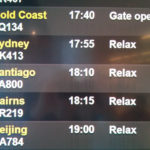
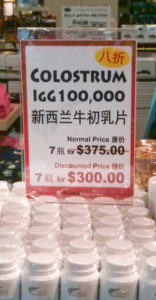
IMG_20160830_135213Auckland airport… 3h to kill. Time to relax according to the departure boards. Endless miles of foyers to walk to get to the transit area and back to the departure lounges areas. I noted a few odd things in the shops – for example for a mere $300 I could get 7 bottles of colostrum tablets. And there was an amazing, huge industrial robot – the sort of size you might associate with car manufacture, dedicated to getting small drawers containing people’s duty free purchases to them. Seemed rather like a sledgehammer to crack a walnut to me.

G5D3182111-odd hours of flying got us to Santiago (managed ~2 h fitful sleep). Spectacular views of the Andes as we descended. Santiago is hemmed in with mountains. It traps the air with inversions. The smog layer for which Santiago is famous were visible clearly, and today was apparently a clear day. The locals tell me that Pinochet wanted to blast through the mountains to the east, to let the smog out over Argentina, though I cannot say if this is an apocryphal story.

Santiago with the Andes in the background.

Santiago with the Andes in the background.

At the airport my bag was off quickly and there were no queues or delays so I got out in record time. The ‘free wifi’ that I had been promised turned out to be sllllooooowwwwww. It took about 5 minutes to send a text email saying I had arrived… While that happened I was accosted by “do you want a taxi” people. Then some people with Santiago airport information badges round their necks. They offered to call the number I had for Trish. It’s the housekeeper they said… the voice insisted the car had broken down so I should take a taxi. Was I suspicious? Yes I was. I thanked them for their “assistance” and waited. 5 minutes later there was Todd to pick me up. Yay, another scam averted.

We’re now settled in at Todd and Trish’s and I am about to hit the sack. Buenos Nochias.

Gallery: https://goo.gl/photos/xmymjctyvYV2d3fD9 (just a few pics… not a lot of chance for photography yet).


Posted in Uncategorized | Comments Off on 2016-08-30 Melbourne to Santiago

2016-08-31 First day in Santiago

A day of cool and overcast. Apparently not a bad smog day – we could see the CBD from 5 km away. Santiago, about the midpoint both North-South and East-West, is the only significant city in Chile and it is huge – population over 6 million sprawling over a basin surrounded by mountains. It hosts the tallest building in the southern hemisphere.

G5D31823Trish took us in to the city centre for a wander round the Museum of Precolumbian Art. Humans moved into the region from the north around 11-15,000 BCE. Through time and geography there were hundreds of groups. I confess I got lost in the timelines and instead just enjoyed the displays for the art and craft. Lovely pottery, carvings, and those amazing knotted string recording systems called quipu.

G5D31827

Quipu – knotted string collections used for record keeping and communication

After enjoying the museum, Trish took us on a wander through the streets, through the main square, and past innumerable buildings that she named for us.  Overall my impression is of rather ‘functional’ architecture. I’m told that it is a consequence of the geography. Rather a late Spanish colonisation from the east, meant that all the opulent extravagance of the early expansion is in the East in Argentina and Brazil.


I’ve put a few more photos in a gallery at https://goo.gl/photos/83heRVaMcb4saG9D6


Posted in Uncategorized | Comments Off on 2016-08-31 First day in Santiago

2016-09-01 Santiago

G5D31860

Historic Central Markets

We awoke (this may be an overstatement – jetlag is still rife) to a blue sky day. Porridge for breakfast.  Supermarkets here seem to have no breakfast cereal that isn’t 95% sugar, or, perhaps worse, low sugar but packed with artificial sweeteners. Oats are one of the few safe options. Other odd things: like in Spain, fresh milk is hard to come by. Milk is generally only available as long-life UHT sterilised cartons; brown sugar is rare too.

After breakfast we headed down the road to the Santiago Markets (Mercado Centrale). These are one of the standard tourist destinations in Santiago. The current market was opened in 1872 in a large building featuring an impressive cast iron roof.

Santiago Markets

Santiago Markets

Santiago Markets

Santiago Markets


Then we headed over the river to the main market area that sprawls over several blocks. The fishmarket was amazing. Meat market … vegie market … flea market… looked like just about anything you would like was there.

Gran Torre Santiago - the Great Santiago Tower - the tallest in South America

Gran Torre Santiago – the Great Santiago Tower – the tallest in South America

We lunched on empanadas, local equivalents of cornish pasties from a stall in the market. Very tasty. By early afternoon we were starting to wane (wee hours of the morning AEST) so Trish drove us home via various scenic/character-rich suburbs, and past a local landmark the Grand Torre Santiago. This 64 story tower is the tallest building in South America, and not far short of the tallest in Melbourne (Eureka tower -has slightly higher habited floor) and Sydney (Q1 has slightly higher architectural features).

View to South from Lo Barnachea, over newly developed suburbs. Snowcapped mountains visible above the ever-present smog layer.

View to South from Lo Barnachea, over newly developed suburbs. Snowcapped mountains just visible above the ever-present smog layer.

After a reviving cup of coffee Steven and I went for a stroll into the local hills. The map suggested there were some tracks into “green” areas. We wandered the streets for 40 minutes to get to the start of the marked tracks, past new housing development after new housing development. These are gated communities surrounded by walls bearing razor wire and/or electric wires, houses of 250 m2 or more … clearly for the growing middle class.  I dread to think what the roads will be like here in a few years. Already Santiago’s smog notorious, especially in winter when people are using wood fires for heating. Occasionally rain clears the air for a few hours to a day. They have a range of gradings for smog ranging up to emergencias, when they close schools and restrict car use based on even/odd number plates etc.. There is a lot of traffic contributing to the smog and congestion is horrible. Yet there seems to be little sign of public transport infrastructure in these newly developing areas. No bus stops. No local shopping areas. I must find out more about what is in the pipeline. Oh and did I say … when we got to where the map showed tracks into the green area, we found a fence and gate, with bulldozers active and clearly a new suburb in the initial stages. Soon all the hills in the area will be sprawling with housing.

Just for interest I looked up the current air quality index (lower is better) for Melbourne (~10-15) and santiago (~75-85 — today was relatively good; I noticed for Valdiva down the coast from here the AQI was 275!).

More photos at https://goo.gl/photos/BbxFT8vo1DwFNanH7.


Posted in Uncategorized | Comments Off on 2016-09-01 Santiago

2016-09-03 Wine tour in the Casablanca valley

After a day in bed suffering from a bug, I was happy to feel up to joining everyone on a wine tour – the plan: head north west to the Casablanca valley. Wine tour/tasting at Veramonte winery, gourmet lunch at a restaurant run by Dave the South African, then on to a small, family-owned winery, Catrala, in the colder area of the valley for a tour and tasting of cold-climate wines.

Vinyard, Casablanca Valley

Veramonte Vineyard, Casablanca Valley

The tour was run by Kylie, an expatriate Melbournian who came to Chile and set herself up in business as Chile Wine Tours. She seems to be doing a good job of it.

Chile is the 5th largest exporter of wine globally, and 9th largest producer. The wine growing regions span a huge range from around 500 km south of Santiago, up to the Atacama region 800 km north of Santiago. The wines were very interesting – somewhat different to the usual Australian wines. It was fascinating to savour a few in their native habitat, and to learn a little about the viticulture industry in this region.

Wine tasting #1, Veramonte, a large winery.

Wine tasting #1, Veramonte, a large winery.

Winetasting #2, Catrala, a small, family run winery.

More photos: https://goo.gl/photos/YUMjMvdDmFPdkmGK7


Posted in Uncategorized | Comments Off on 2016-09-03 Wine tour in the Casablanca valley

2016-09-05 Pucon and Huerquehue National Park

G5D32098Pucon, on the banks of Lake Villaricca is very scenic. The conical, snow covered Vulcan Villaricca a few km away is spectacular. We took a “random walk” on the way here — steven spotted a road on the map that might give us good views of the volcano over the lake. We ended up getting a guided tour of a local farmer’s fields to get to the spot the local thought gave the best views. They were, indeed, spectacular.

The next random walk was a little less successful. The load location looked suitable for wonderful views. Alas 25 km along, 3 km from the scenery, we were stopped by a gate. The end of the road was private property. Sigh.

G5D32305Accommodation was fine. $80 a night for a 2 bedroom apartment with lake views. We made do with the 6 cheap matches provided to light the gas for 3 days. And clearly there are some issues with Chilean plumbing that cannot cope with toilet paper. I tried Google but came away unenlightened.

G5D32113Wandering around Pucon town centre we heard music and ended up in a concert in the local civic hall. Lovely singing, and we were plied with a plate of cake and a glass of mulled wine. Very pleasant.


G5D32285 G5D32244G5D32175They run tours to walk up the volcano, providing the necessary crampons, ice axe and warm gear, but it is a long long long uphill trudge. We decided it was safer and more scenic to head to the national park with the Araucaria trees and lovely lakes instead. It was very pretty. We headed up there two days in a row (ran out of time on day 1 to go everywhere and see everythinG5D32296g).


Lots more photos, as usual: https://goo.gl/photos/5ZsnBM7f2yNaCwaf9

Now back to Santiago. Today it is raining, so we did well with the fine weather whilst we were down here. We’ll revisit Salto del Laja on the way back and then I will build a post on that scenic attraction.


Posted in Uncategorized | Comments Off on 2016-09-05 Pucon and Huerquehue National Park

2016-09-04 & 8 Saltos del Lajo

Saltos del Laja

Saltos del Laja

Saltos del Laja are a set of waterfalls on the Laja river. Together they are around 450 m wide, though access to the western falls is somewhat restricted – the western bank of the falls is owned by a hotel so only guests can get there.


Saltos del Laja, evening light

Saltos del Laja, evening light

We arrived on Sunday evening at sunset 7:30. We were surprised to find the narrow path to the falls was wall-to wall market stalls and thronging with people. We rushed past, eager to get the last of the light on the falls. And the falls were very nice. By the time we left it was too dark to photograph the bustle at the stalls, but we planned to return on our way back to get some photos in the daylight.

In the morning we started before dawn by melting the ice from the car windshield and pottered down to the falls. They had locked the gate to the track, but we found a way through and enjoyed the dawn light on the water. After an hour or so pottering around taking photos in the cold (it gets hard to adjust the camera when you lose feeling in your frozen finger tips) we headed south towards Pucon.

Saltos del Laja; the path to the falls is fringed by small market stalls

Saltos del Laja; the path to the falls is fringed by small market stalls

We dropped back to Saltos del Laja on our return trip to discover the stalls were mostly closed and only a few people around. Maybe the crowds were a Sunday evening thing. Still, it was a lovely place to munch lunch and enjoy the different light to our previous post-sunset and pre-dawn sessions.

More photos: https://goo.gl/photos/PpykrfW3BQ4tqpk37

Posted in Uncategorized | Comments Off on 2016-09-04 & 8 Saltos del Lajo

2016-09-10 Peru

Hills outside Santiago, smog in the valleys, Andes in the far distance

Hills outside Santiago, smog in the valleys, Andes in the far distance

img_20160910_190758

Busker in cafe in Ollantaytambo

We had an early start – up at 04:30 for a 5AM minibus to the airport. I had a window seat so I got views of the mountains to the east (alas, into the glare of the rising sun).  Santiago-Lima, Lima-Cusco all went smoothly. Then we had a long bus trip through Cusco Rising to an altitude ~4000 m or so, then down into the Sacred Valley at about 2900m. It gets dark quickly in the mountains here. We enjoyed sunset at 6PM as the bus descended. After dumping bags at our accommodation in Ollantaytambo, we dined at a local eatery. I tried Alpaca steaks, which were very tasty, if a little salty, serenaded by a busker with guitar and pan-pipes.

No gallery for this post. Pics with my phone camera are not worth high res.


Posted in Uncategorized | Comments Off on 2016-09-10 Peru

2016-09-10 Peru-Ollantaytambo

Ollantay Tambo is a town down in the Sacred Valley on the banks of the Urumbamba river. It’s a railway town where one can catch the Machu Piccu train, and also has its own Inca ruins.

Ollantaytambo from the archaeological site

Ollantaytambo from the archaeological site

Stall near Ollantaytambo Station

Stall near Ollantaytambo Station

This is a tourist town, at least in the centre and around the station. At the station there are dozens of small stalls where you can purchase water, snacks, sunblock, handicrafts and other necessities. The square around the archaological site is also full of market stalls.

Ollantaytambo

Ollantaytambo – local transport

Local transport is mostly foot or 3-wheel tuk-tuks made by welding a cabin to the back of a motorbike. They bounce around the cobbled streets in a way that looks most uncomfortable, but anything wider won’t get down some of the narrower streets. The other vehicles we saw were tourist buses… by the hundreds, with special traffic police to try to resolve the endless traffic snarls.


Ollantaytambo; view down the Orumbamba river valley

Ollantaytambo; view down the Orumbamba river valley

Although the town seems dominated by tourism, the valley also has a lot of mixed farming, and the views from the hills show how extensive this is.

Lots more photos at https://goo.gl/photos/EALFBNjKspyvTwNZ8

Tomorrow we’re off to Machu Piccu for a couple of days. 🙂


Posted in Uncategorized | Comments Off on 2016-09-10 Peru-Ollantaytambo

2016-09-12 Peru-Machu Piccu

Machu Piccu

Machu Piccu

An hour and a half downriver on the scenic railway got us to Aguas Callientes, the station/small town in the valley below Macchu Piccu. From there one can walk up 600 m cimb of steep steps or take a bus (30 minutes of severe zig-zags – we took this easy option).

Day 1: Steven and I took the track to Machu Piccu mountain that rises precipitously 600 m from the ruins. The peak is over 3000 m, so the air is rather thin for climbing. It took us quite a while. We then enjoyed the top, with

Machu Piccu

Machu Piccu Mountain – endless amusement watching selfie takers.

the spectacular views of the ruins and the

Machu Piccu, cave under the temple of the sun

Machu Piccu, cave under the temple of the sun

surrounding mountains, and the amusement of watching the selfie crowd. Then we were told to ‘Vamos’ by the staff, so we headed down and pottered around the ruins until closing time, when we headed down to our accommodation at Aguas Callientes

Machu Piccu

Machu Piccu

Day 2: Up at 4:15 for 4:30 breakfast then out to the bus-stop just after 5am for the 5:30 first bus. There was already a queue – I counted about 300 in front of us, and by the time the first bus arrived there were 200 more behind us. We eventually got a bus at 5:50 and headed up. First, we headed up the other peak adjacent, Huayna Piccu – fortunately only 300 m vertical climb. Once again the views were fabulous. Early morning light over the mountains, and views of Machu Piccu from the other side. The climb was steep, definitely not for the acrophobic, and near the top are some Inca stairways that are near precipitous. Then down to the ruins again for a gentle potter around with the rest of our travel group.

Inca stairway

Inca stairway

Machu Piccu from Huayna Piccu

Machu Piccu from Huayna Piccu


There are lots more photos here: https://goo.gl/photos/tNbx8DfND6fAUtgB9

Posted in Uncategorized | Comments Off on 2016-09-12 Peru-Machu Piccu

2016-09-14 Ollantaytambo to Cusco

ollantaytambo taxis

Ollantaytambo taxis

We had a final morning wander round the streets of Ollantaytambo before our transport arrived, exploring more of the markets and dodging the taxis.

Ollantaytambo - market wares

Ollantaytambo – market wares


Our transport was a passenger van which arrived on time. We loaded the large bags onto the roof rack and climbed in. The driver took the 7 of us via several tourist attractions  and on toollantaytambo-to-cusco-map our accommodation in  Cusco. We left at 10am, arrived around 6pm with over 100 km driving on mostly rough roads plus the sightseeing time. Total cost equated to around AU$100 – pretty good value! It’s about the same cost as a taxi from home to Tullamarine airport (~35 mins & 50 km vs 8 h & 100 km).

Housng development

Housing development

The driver took us up onto the plateau on gravel roads, winding through varied environmental types. In several places we saw lots of tiny buildings in what looked like housing developments. The driver told us that people build small initially, then added more and more rooms as resources became available.


Las Salinas - salt ponds

Las Salinas – salt ponds

First stop was the Maras salt mines (Las Salinas). The Inca dried the saline springs in around 300 small pools to make salt. The industry is still run by a cooperative of salt workers, but there are nearer 6000 pools now. They are spectacular. we were able to wander along narrow paths between the ponds to see how it all works. The saline water passes along many small channels, and is directed or blocked into ponds as required by the simple expedient of blocking the channel with a rock. Once full, the pond is blocked and the water dries out over days to leave behind the salt to be harvested. We have seen packets of the Maras salt in many tourist shops as well as the local supermarkets, and they also make salt carvings etc. Our hour there vanished quickly.

Moray Inca site

Moray Inca site

Next was the Inca remains at Moray. Here there are a series of terraces arranged in circular patterns to make substantial dips. Why? No-one knows, though there is speculation that this was an agricultural research place. I think they were probably filled with water and served as a swimming pool. Or perhaps it was a 3-hole inca golf course. Who knows really?

Artisan workshop

Artisan workshop

Next a trip along more gravel roads and a visit to an artisinal workshop where they make alpaca, llama, and sheep wool products. They do their own dying with natural plant and animal products, and we were treated to a demonstration of various techniques to generate the different colours. Fascinating. Then we were given an opportunity to buy goods (no pressure, but a variety of things were bought, and I am sure the driver received a commission.

Chinchero Inca site, with Catholic monastry built on Inca foundations

Chinchero Inca site, with Catholic monastry built on Inca foundations

Then, on to the Chinchero site, where the Inca buildings were incorporated into a Francescan monastry. Some interesting architecture. And, as usual, endless sellers of artisinal goods – scarves, blankets, pots, carvings …. At 3800 m we were not the most energetic, so we had a quiet toddle, then headed back (slowly) to the carpark for the final leg into Cusco, and some mildly terrifyingly narrow streets. Somehow our driver managed to squeeze a van through mini-sized gaps. More soon on Cusco. In the mean time enjoy the gallery of photos at https://goo.gl/photos/E2towhSQraeikudd8


Posted in Uncategorized | Comments Off on 2016-09-14 Ollantaytambo to Cusco

2016-09-15 Cusco

Peruvian dancers, Cusco

Peruvian dancers, Cusco

Cusco – 3400 m above sea level.  The air was definitely thin here.  It probably affected us more than the locals, but on our first day there were what we took to be traditional Peruvian dancing competitions/exhibitions in the Plaza. Lots and lots of teams – we took hundreds of photos over a couple of hours and they were still going when we left. We couldn’t follow the commentary in rapid Spanish, but the dances seemed to have some common themes – agriculture, food, and boy gets girl. All very colourful.

inca wall

inca wall

We wandered around the streets, enjoying the ambience. There were lots of Inca walls with beautiful stonework, and what we presumed were Inca stones recycled by people who lacked the skills to make things fit. Street vendors were everywhere, and there were numerous artisan’s markets and streets with lots of tiny (or not so tiny) shops with all manner of things – woolen goods, wood and soapstone carvings, religious (Catholic) iconography, etc.

street vendor wares

street vendor wares

One street seller seemed to focus on switchblades, flick-knives and knuckledusters – all illegal in Australia.

Most of the restaurants we ate in had signs in strategic locations “Zona segura en casos de sismos”, a reminder that this is a place prone to dangerous earthquakes. This was also evident in the building constructions – light weight bricks, concrete ring beams etc.

Markets

Markets

We spent some time wandering the local market – somewhat like Victoria Markets in Melbourne, but with a Peruvian flavour. Lots of colour and action.g5d33706


Plaza de Armas, Cusco

Plaza de Armas, Cusco

As usual, there are more photos. Check out the selection in the gallery https://goo.gl/photos/vDTovP54RveoptGx9

Posted in Uncategorized | Comments Off on 2016-09-15 Cusco

2016-09-18 Santiago

BBQ wineglass stand

BBQ wineglass stand

The final few days are upon us. Sunday 18th is Indpependence day in Chile, with Monday a national holiday. It celebrates Chile’s declaration of independence from Spain in 1810. Lots of flags are on show. We went to a barbecue with Trish and Todd and family with a group of other English-speakers who live in Santiago and their families. Great company, good wine, fine food, mild weather, no masses of biting insects. Altogether a very pleasant evening.


Statue of the Immaculate Conception, Santiago

Statue of the Immaculate Conception, Santiago

Monday was a public holiday, and with little traffic on the roads for a couple of days the air was relatively clear, so we took the opportunity to visit the Parque Metropolitano de Santiago, which occupies a hill on the north side of the city centre. The peak features a large ‘statue of the immaculate conception’ (this is, after all, a deeply Catholic country) and has some good panoramic views over the city (when the smog allows). We took the funicular to the top. The air temperature peaked around 30°C so walking up was not on the agenda.

santiago views

Santiago views


Afterwards we wandered back to the car through the streets of Bellavista, enjoying the plentiful street art.

street art, bellavista

Street art, Bellavista

street art, bellavista

Street art, Bellavista


Las Condes Artisan Markets

Las Domenicos Artisan Markets – Insectorium


The next excursion was to the Artisan market at Los Dominicos. Fascinating place with a huge diversity of arts and crafts as well as a bonsai garden and insectorium. Lots of diversity – weaving, knitting, alpaca wool clothing, paintings, photos, pottery, jewellery, pewter work, wood and stone carving, … lots to see and do. And they had interesting coffee with a multi-layered appearance. Very clever.

Las Condes Artisan Markets interesting layering of coffee.

Las Domenicos Artisan Markets: interesting layering of coffee.


gs-2016-09-21-g5d34113

Qing Dynasty armour, exhibition from the Forbidden City

Next day, some packing then another trip into the city for more exploration. Among other things we found an exhibition of Qing dynasty treasures from the Forbidden City.

And then it was time to finish packing and head to the airport — 25 h door to door with a 13 h time shift. Hopefully the jetlag will be easier this way round.

More photos at https://goo.gl/photos/sCcKwdd7yN5WiCX88
2016-11-14 to 2016-11-19 Townsville

Part 1

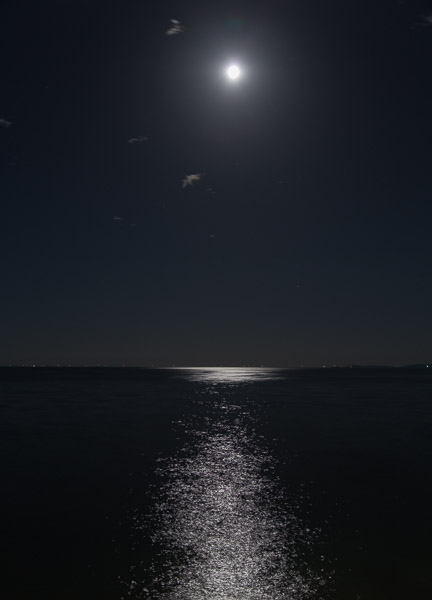
Full moon on the Townsville foreshore, preceding the coral spawning

Full moon on the Townsville foreshore, preceding the coral spawning

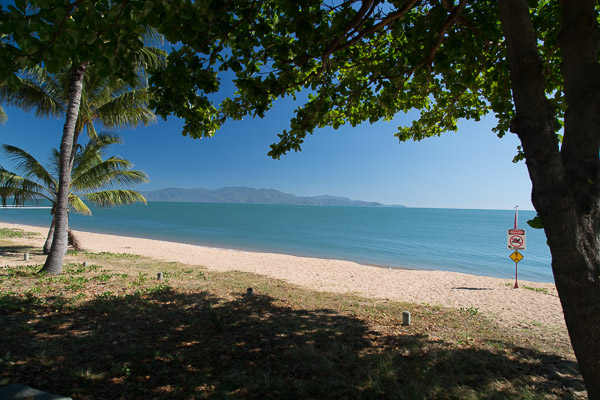
Well here we are in sunny North Queensland. daytime temperatures around 30 in the shade, and nights dropping to mid-20s overnight. Basically it is HOT. We are staying initially in Townsville with our friend Damien (we spent our first evening on the foreshore admiring the huge full moon whilst munching cheese and dips. Very relaxing), then heading down the coast to AIMS (Australian Institute of Marine Science, where we will be part of a team studying coral spawning for the few days when this happens).

Townsville foreshore. Stinger season - nothe the no swimming sign.

Townsville foreshore. Stinger season – note the the no swimming sign.

Strolling round Townsville we were struck by the lack of crowds. This is not a tourist mecca. Sure, there are a few tourists about, but this is not the Gold Coast nor Cairns, where the whole economy seems to revolve around the visitors. We wandered along “the strand”, a slender park along the waterfront. Marine stingers of various types are prevalent in summer, so swimming has to be restricted to protected areas with nets or filtered water to exclude them.

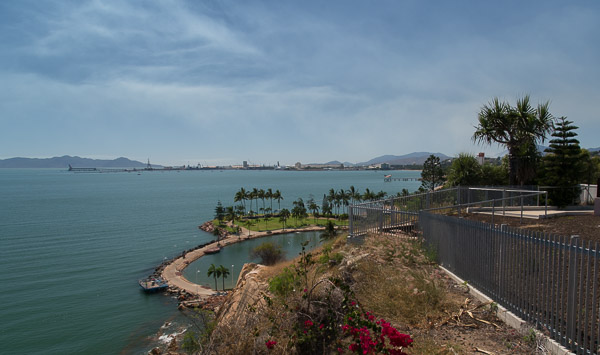
Townsville seafront from the point - swimming area and port area in the background

Townsville seafront from the point – swimming area and port area in the background

The north end of the Strand is Kissing Point Fort (established on the rocky headland around 1891 as part of the coastal defense of the time, and expanded in the 1940s as strategic fortification to protect the coral sea). There are lots of historical plaques and displays on the interesting history.

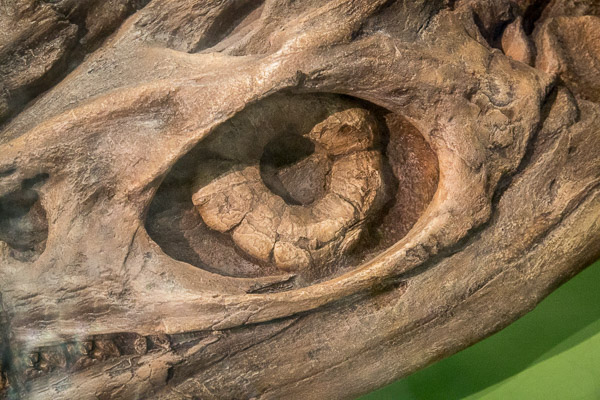
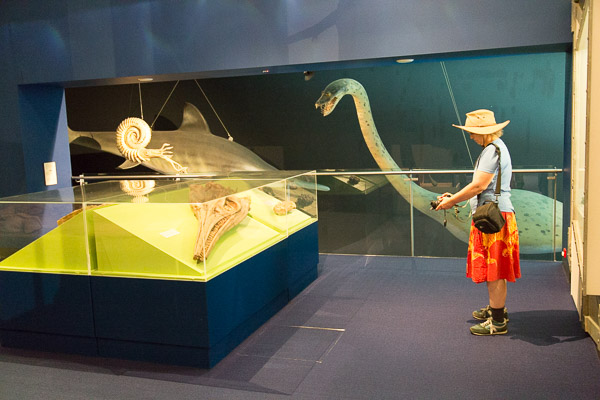
At the south end of the Strand is the aquarium and the Museum of Tropical Queensland. We visited the latter. They have some lovely displays – shipwrecks (the Pandora), dinosaur fossils, coral and other natural history, and a history of Townsville (150 years), and all without great crowds of tourists. 🙂

Fossil plesiosaur (detail of eye) in museum

Fossil plesiosaur (detail of eye) in museum

Displays in museum

Displays in museum

Next day we headed North for an hour or so to the Paluma area, the southernmost part of the strip of North Queensland Rainforest. We had a quick look at Crystal Creek, a popular waterhole area in hot weather. then up along 18 km of narrow winding road to Paluma. At 1000 m, it was a relief – temperatures in the low 20s. We enjoyed a few short rainforest walks and explored the township.
Paluma ranges
previous arrow
next arrow
Paluma ranges
Paluma ranges
Paluma ranges
Paluma ranges
Paluma ranges
Paluma ranges
Paluma ranges
Crystal Creek Waterholes
previous arrow
next arrow

In the morning we visited James Cook Uni, which turns out to be about 10 km out of town. They have some impressive facilities for animal research there. They have one of the few veterinary courses, a medical school, and so on.

AIMS facilities

AIMS facilities

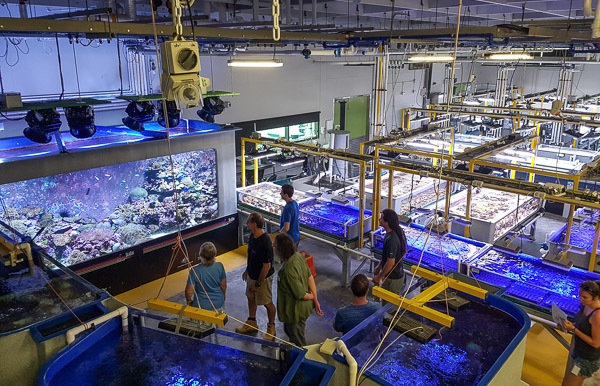
With time flying we then headed around the coast to AIMS, in time for our laboratory inductions and paperwork needed to get our access passes. They have a fantastic setup. Huge areas of aquaria. An amazing system for water treatment – filtration, salinity regulation, temperature regulation – all controlled by a high tech computerised system that would not be out of place in a chemical factory. And everything is duplicated so if any part breaks it switches over the the alternative to keep everything running while repairs are made. They process and use 1.5 million litres of water every day, which gives you some idea of the the scale of the system.

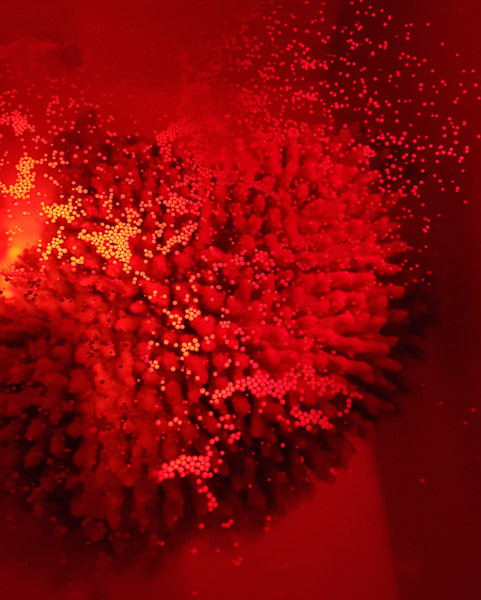
Coral gamete bundles rising to the surface after spawning

Coral gamete bundles rising to the surface after spawning

The coral spawning studies required a team of 8 AIMS staff to charter a boat out to the middle reef for several days where they collected colonies that were starting to set eggs. These were brought back and placed in aquaria in time for the right timing of full moon/tide/whatever. Each species has its own rhythm, starting spawning 4 or more days after the full moon at a specific time of night. They can generally predict within a day or 2 when each will spawn, but to some extent it is a waiting game.

Colonies are placed in small tanks

Collecting coral gamete bundles

Collecting coral gamete bundles

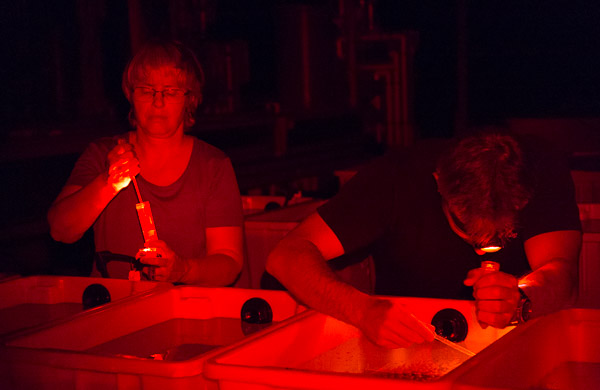
where researchers like us could collect the spawn for various experiments.It gets busy at times. This is all done under dim red lights. Rather a challenge for photography. We were collecting for cryopreservation so we got the samples from whichever species were available and headed to our makeshift lab to process them. Fortunately we could do the processing under normal lights.

g5d35471g5d35523

So far we have had a relatively calm start – only a few spawning at a time. The guess is that tonight it will start to get hectic with all hands on deck as multiple colonies of multiple species all start to spawn over the span of a few hours. I expect tonight we will be working into the wee hours. Luckily it is interesting stuff. The hours will fly by.

I’ll add more posts later. Here is a gallery of images from this trip so far:

https://goo.gl/photos/2mFXoy12VtMCR95Z7

Part 2 2016-11-20 to 2016-11-24

2016-11-20_img-3605-3612-stack-3605New moon + 6 days. Different coral species spawn at different times after sunset – predictably within about plus or minus 30 minutes, and at different days after the full moon. There is also variation between individual coral colonies (made up of thousands of genetically identical polyps, formed by budding from the original founder), so different individuals of each species may spawn a day or two apart, so each night we get a different range of

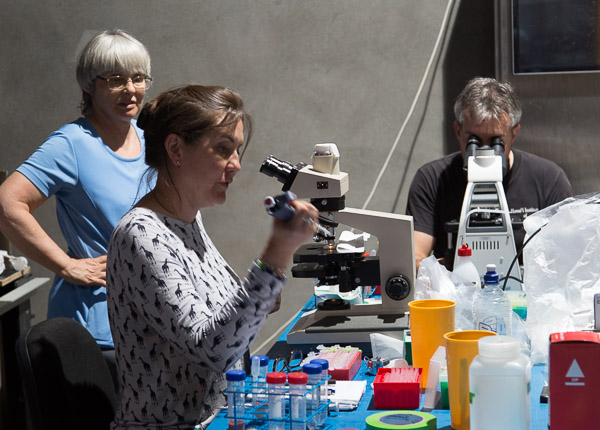
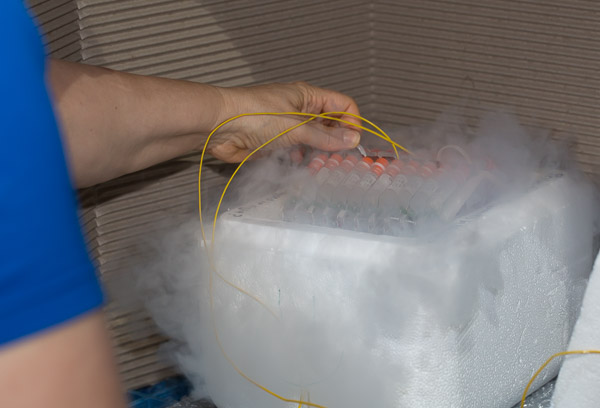
Cryo-Lab setup at AIMS

Cryo-Lab setup at AIMS

corals spawning through the dusk to midnight period. The staggered spawning times is a blessing since we can then process the early spawners whilst waiting for the later spawners. Even then it gets hectic as we may have half a dozen individuals spawning in quick succession.

In between the lab work we have a little free time. I spent a couple of hours this afternoon exploring the local environs.

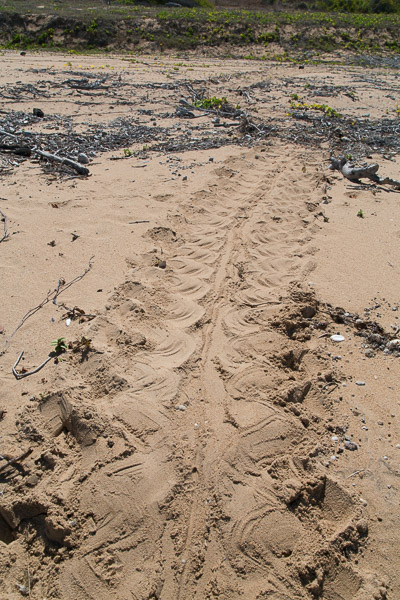
2016-11-21_g5d35664The local beach features lots of turtle tracks, so I took great care not to step on any nests with buried eggs. At the end of the beach is a granite promontory which I clambered up onto. Walking on the leveller bits of granite outcrop was pleasant. The nasty spikey grass in between the outcrops was decidely unpleasant. But the scenery was rather nice, and the white breasted sea eagle soaring above my head was a bonus. They are really spectacular birds. After an hour or so I was drenched with sweat (a problem with 30+ temperatures and unshaded sun), so I headed back for a cool shower.

2016-11-21_g5d356882016-11-21_g5d35717

2016-11-21_g5d357272016-11-21_g5d35726

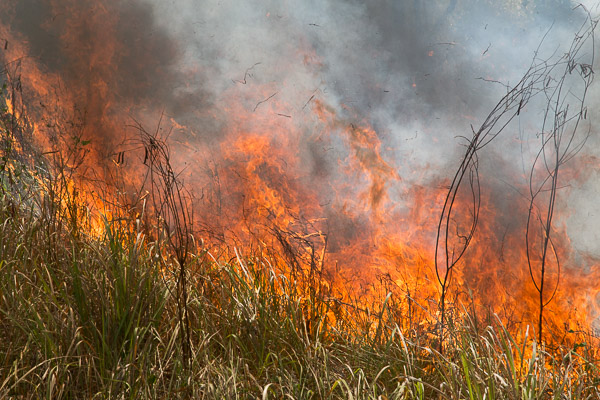
wildfire beside road

wild fire beside road

23/11/16. Today Jill is feeling a little more energetic, so we headed off for a little adventure in the local National Park. 3 km down the road we discovered a wildfire, clearly just started – a few square metres when we reached it. By the time we’d stopped and backed up it was spread along about 10 m. I snapped a few photos – by then it was growing rapidly, so we headed back to AIMS to alert the reception who could contact the fire authorities. By the time we got back, en route to the park, the fire was well established and growing fast in the robust breeze.

2016-11-23_g5d35938Onwards to Bowling Green Bay National Park: it is actually fairly large – 554 sq km, spreading from the coast to Mt Elliot and Saddle Mt, and incorporating some RAMSAR wetlands. Exploring these RAMSAR wetlands, however, might be problematical – Crocodile Creek and Alligator Creek indicate the sorts if dangers for the unwary ornithologist.

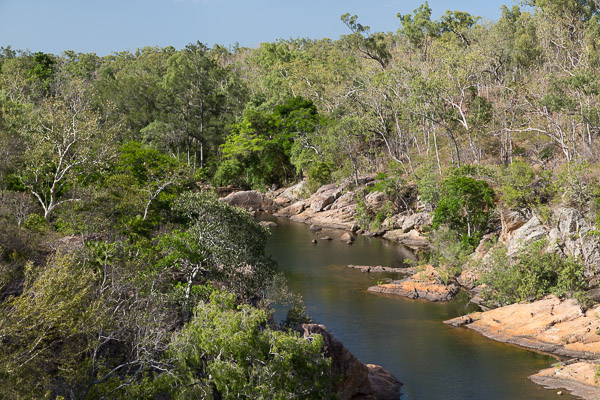
2016-11-23_img_3724We judiciously went towards the mountains and the headwaters of Alligator Creek. This is a very pretty area. We’re at the end of the dry season so water flow is almost down to nothing, but there are still lots of waterholes. We enjoyed watching turtles, nesting fish defending their territories and lovely woodlands. We took ourselves up the track to Cockatoo Ck, which proved a physically taxing walk with temperatures around 30°C and reasonably humid. We had swim in the waterhole there (alas, somewhat algal and warm, but refreshing nonetheless) then headed back, enjoying sights of blue winged kookaburras and so on.

Back down on the flats, in the acreage properties there are various places offering buckets of mangoes at $10. Clearly money grows on trees here 🙂

On the way back, there was a fire crew working on the fire, now covering several hectares. Hopefully our alert helped them get there promptly and minimise the problems.

gamete bundle emission bottom right

gamete bundle emission bottom right

Dinner, then back to the lab. Lots of coral spawning; lots of sperm freezing, but we were still in bed by 1am so not too bad. And as a special bonus I got a photo with a coral spitting out a gamete bundle. It’s a pity that I don’t have the specialist lenses or access to the coral at the peak of spawning to get good shots.

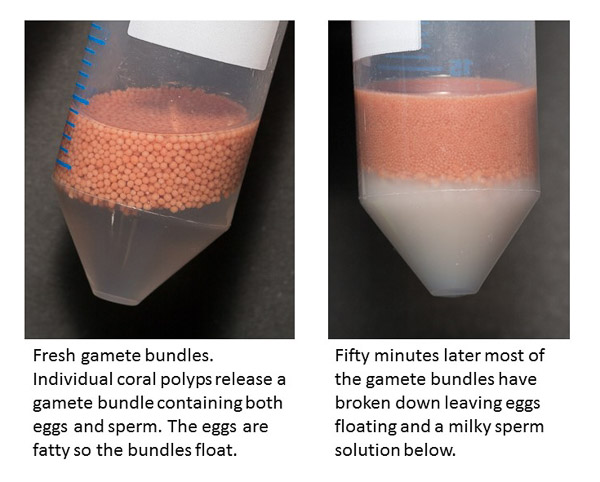
coral gamete bundle breakdown

coral gamete bundle breakdown

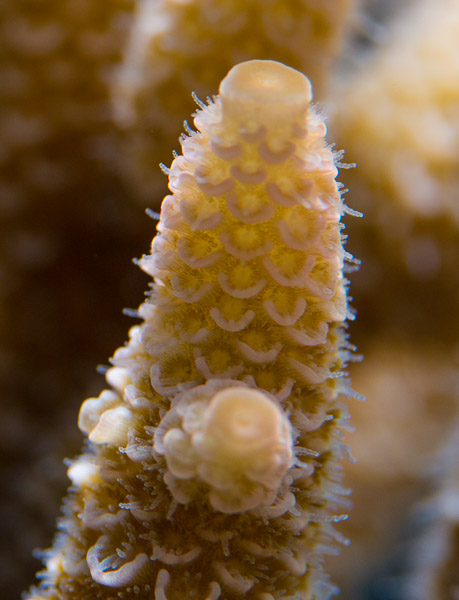
In case you are wondering what we are spending our nights doing, we are contributing to the development of a “frozen zoo” with different species of coral. So we wait for the coral to spawn, releasing gamete bundles. These coral are hermaphrodites – each polyp makes sperm and egg. These are released as a gamete bundle, that rises to the surface, and then, over time, the bundles break down, releasing the sperm and egg. They have ways of preventing self-fertilisation, so the sperm need to find eggs from a different individual, hence the need for synchronised spawning. Once the gamete bundles have broken down we can suck up the sperm from the bottom of the tube (the eggs go to other groups), and freeze the sperm in liquid nitrogen.

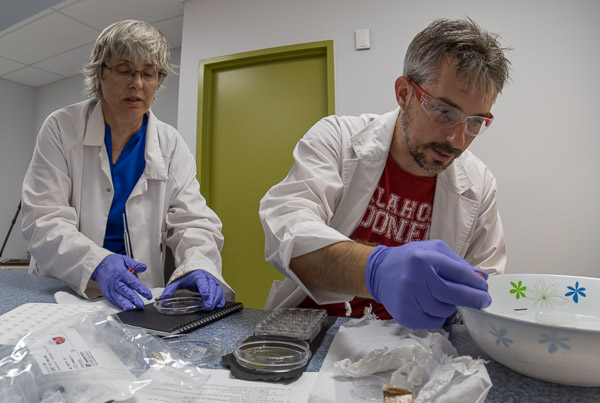
Jill and Mike doing science

Jill and Mike doing science

24/11/16 Back to the lab for the morning.  Lots of interesting activity. Coral have algae called Symbiodynium living inside them. These algae get protection from the coral, and in return, being photosynthetic, generate nutrient for the coral. When the coral get too hot they spit out the algae as part of their stress response – this is the coral bleaching that is increasingly a problem in the Great Barrier Reef (and elsewhere round the globe).These algae were being cryopreserved as part of the whole project.

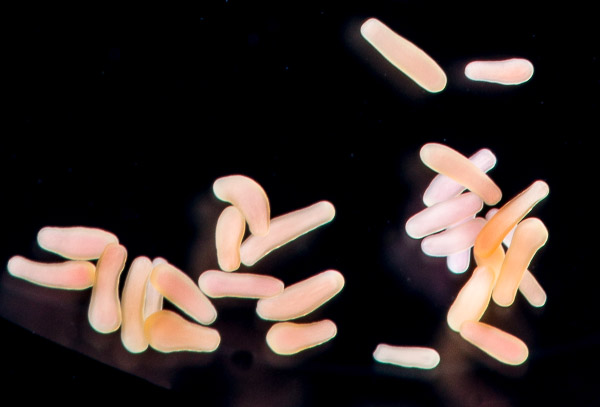
Coral planula larvae, each about 1 mm long, and 4 days after fertilisation.

Coral planula larvae, each about 1 mm long, and 4 days after fertilisation.

Also there were some larvae – teeny tiny larvae about 1 mm long, about 4 days after fertilisation. These will shortly undergo transformation and settlement.

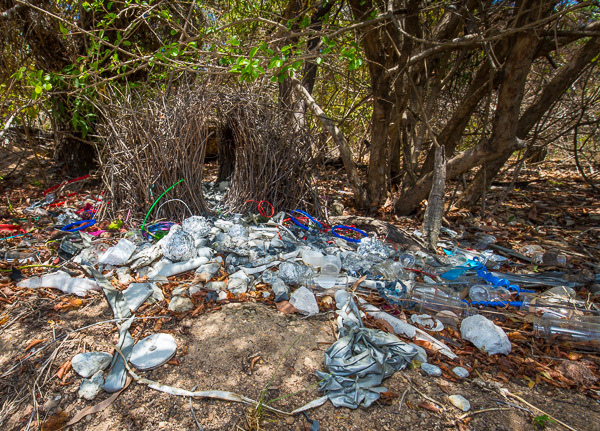
Bowerbird bower, AIMS

Bowerbird bower, AIMS

A hidden advantage of hauling around large cameras with imposing lenses is people think you are a photographer and point you to scenic places. One of the cleaning staff kindly took us to see a great bowerbird bower tucked away under bushes in a corner of the AIMS facility. The bird had acquired a fascinating collection of “trinkets” including roofing screws and laboratory vials. I wish the bird had been present and displaying, but we cannot have everything.

Time to dash to the lab for the night spawning. More later. I’ve added more photos to the trip gallery so scroll down to see the new ones: https://goo.gl/photos/2mFXoy12VtMCR95Z7

Part 3

coral spawning

Coral spawning.

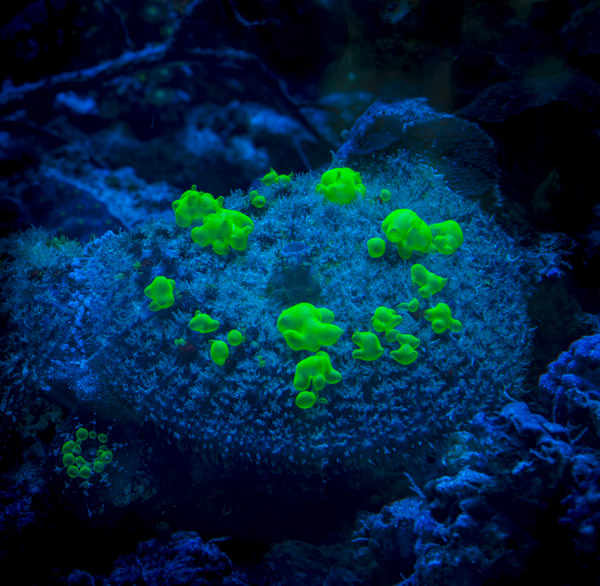
GFP colours

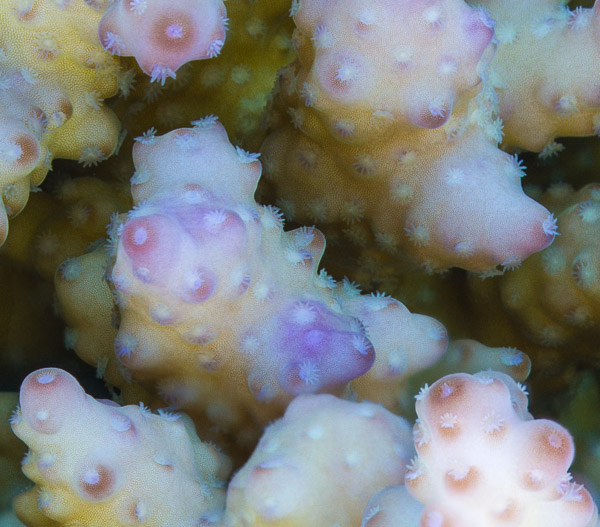
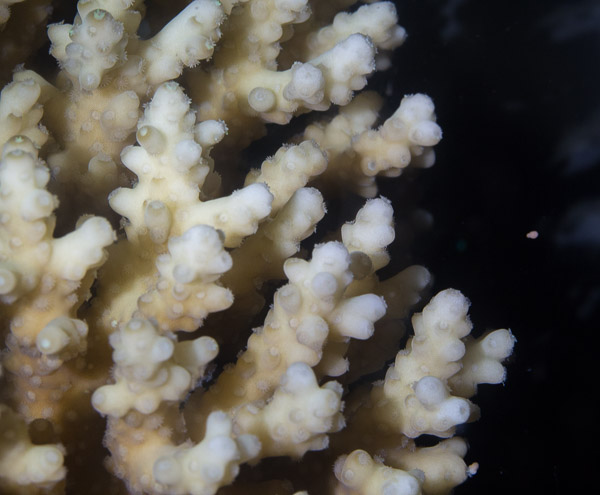
Green fluorescent protein colours in blue light. When I used a flash this beastie was just a uniform dull brown blob

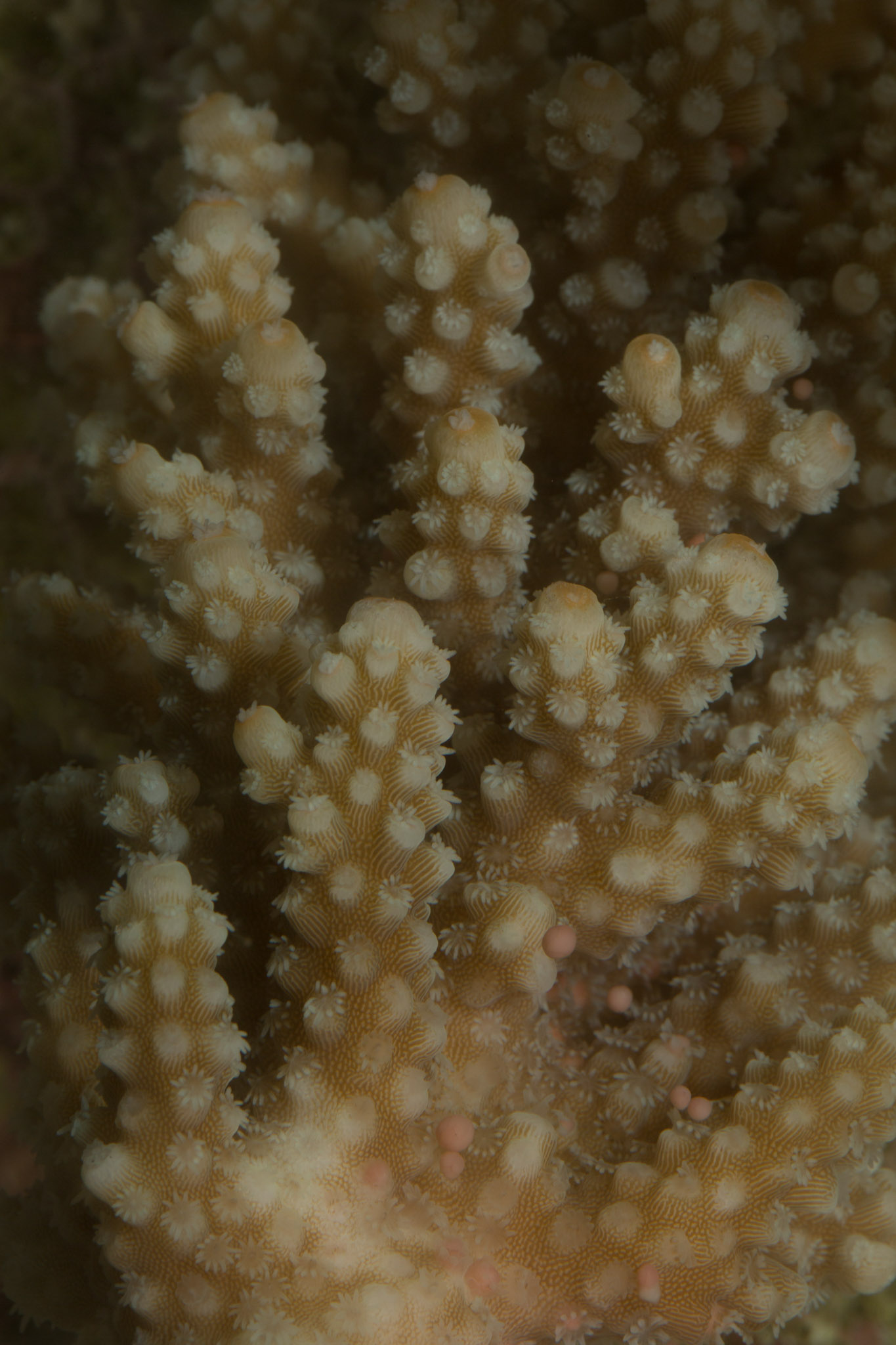
24/11/12 Evening. There were now early coral spawning today, so I got a chance to get a few images of coral at night. One of the staff pointed me to a tank where I could use a white light… much easier, but still a challenge. The coral polyps are tiny and getting sufficient depth of field is hard. The air-glass-water interface of the tank introduces substantial chromatic and other optical aberrations. Oh for a nice rod lens that I can poke into the water and get clear shots from really close up.

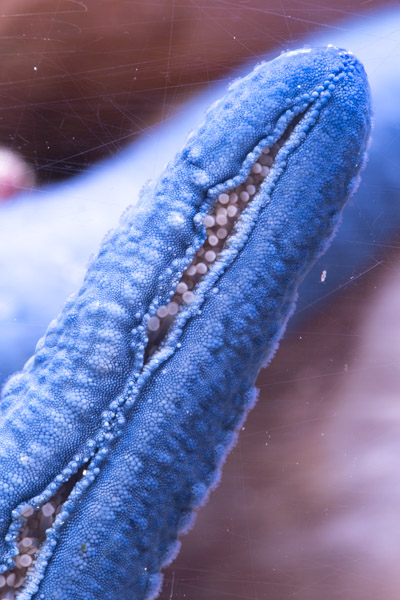
Linkia (blue linkia) starfish - part of an arm.

Linkia (blue linkia) starfish – part of an arm.

25/11/16 I had a little free time so I took photos of some of the creatures in the aquaria at AIMS (above). There are lots and lots of nice things to see. And at sunset I headed up to the top of the hill behind the house for some sunset shots.gs-2016-11-25-20161125_191337

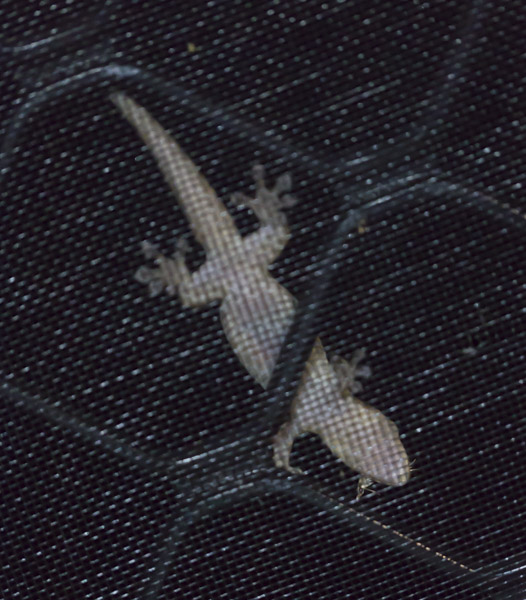
gecko outside the insect screened verandah

gecko outside the insect screened verandah

After dark we enjoyed watching the geckos feeding on moths attracted to the lights of the house.

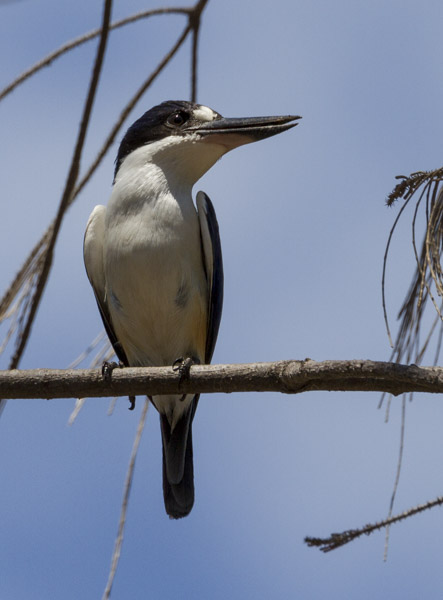
Kingfisher, Cape Pallarendra Conservation Park, Townsville

Kingfisher, Cape Pallarendra Conservation Park, Townsville

26/11/2016 Time to pack for our evening flight. We took the opportunity to visit Cape Pallarendra Conservation Park just outside Townsville, literally only 15 mins from the centre of town. We saw a lovely kingfisher, an osprey fishing, WW2 coastal bunkers and observation posts and nice beaches.

Osprey, Cape Pallarendra Conservation Park, Townsville

Osprey, Cape Pallarendra Conservation Park, Townsville

Final observations on Townsville: They have amazingly slow traffic lights. If you want to get anywhere fast, avoid the main roads with lights – take the back streets. The weather when we were there was relatively pleasant – 32 daytime and 26 overnight minimum; not too bad, but draining to do anything energetic, especially out in the full sun. Multiple showers per day helped. A lot of the year the temperatures are higher and come with high humidity and correspondingly high discomfort levels. Apparently we were very lucky with the weather. Of course, when it is hot, it might be nice to swim in the sea. Alas, for half the year there are marine stingers that make swimming hazardous. And swimming on remote beaches also comes with the risk of crocodiles. The advice is not to walk along the water’s edge. The city is dominated by Castle Hill, a rugged granite monolith that rises about 280 m from the city, dominating the skyline. We drove up just before sunset and discovered the road was full of people in lycra. We thought it must be a fun-run, but it seems that many of the locals take a daily jog to the top. We were surprised.

Overall we had a fantastic time. Townsville is a great place to visit, and the AIMS research centre was amazing.

I’ve added more photos to the trip gallery so scroll down to see the new ones: https://goo.gl/photos/2mFXoy12VtMCR95Z7

And here is a short video of the coral spawning. Some of it is rather shakey – hand-held because I couldn’t get a tripod in place, and at high magnification, but it gives you an idea of what we could see in a more dynamic way than the still photos. Note that youtube may offer you the video at reduced resolution so if you play at full screen size, select the 1080p under quality within the settings dialogue (the cogwheel at the bottom right when you mouse over the video)

Stay tuned… we’re off to Sweden tomorrow. 🙂

2016-11-30 Bangkok

Railway, walkway and roadAll packed, off we go to the airport for a 2-month trip to Sweden. As we checked in we realised that we had planned a whole day in Bangkok en route. Both Jill and I had forgotten, and we were dressed for a Swedish winter on arrival. So, overnight to Bangkok, where we leave a bag of fleece jumpers at the left-luggage place, change some money and head on the railway towards town. It seems funding for the railway ran out before the line quite made it to town, so we had to take a second line to Victoria Monument, and then a shuttle bus to the centre. Little did we realise how many more modes of transport awaited us.

2016-11-30_g5d36539Our visit was dominated by the death about 6 weeks earlier of the much loved king who had held the throne for 77 years. Everywhere were symbols of the sorrow at his passing. posters, kilometers of black and white cloth draping along fences, flowers, shrines … most people were wearing black. … a year of national mourning … large numbers of people are coming to Bangkok to mark their sorrow. To cater, there are free shuttle buses etc, and stalls for water and food. Many attractions, such as the national museum, temporarily have free entry. It is an amazing response.

Buddha statue faceFirst stop, the National Museum where there are cultural relics, historical information, and some lovely bats roosting under the eaves. Jill bought a black t-shirt to match the current fashion.

Pondering our maps outside the museum a helpful local suggested some places to visit and negotiated a tuktuk driver to take us round, waiting for us at each site. 80 Baht (about AU$3.50) got us the driver for a couple of hours plus quite a few km of transport. For reference, average salary in Thailand is around AU$600/month, with unskilled workers typically getting around AU$200/month.

Tuktuk in thailandSo off we puttered, taking in giant standing Buddha, Happy Buddha, Fashion Show (this turned out to be a tailoring factory who could turn out made to measure suits in fine cashmere wool in one day for US$200 (in reality probably half that if you are good at bartering). Then, the driver suggested that the next stop, reclining Buddha was closed to tourists until 3 and why don’t we take a boat tour for an hour.  We had a boat and driver to ourselves for an hour and a quarter meandering the waterways that percolate through Bangkok. We presume the tuktuk driver got a commission that supplemented the meagre amount we paid for his services.

Riverside housingThe boat trip was fascinating. Bangkok is build on a delta, and chugging up the waterways we found both sides were lined with buildings build on decaying wooden posts sunk into the river bed. In many cases the buidings were lop-sided and lots appeared past redemption and were uninhabited and decaying away.

The boat dropped us at a dock from where we walked to the the Reclining Buddha, past more free water bottles and free icecream.

reclining BudhagThe reclining Buddha is vast – 15 m high and 40 m long, nicely gilded. It is in part of the Wat Pho Buddhist temple complex, which itself is huge. We wandered around there for a couple of hours, awed by the intricate decorations, elaborate structures, bonsai trees, temple cats, and Buddha’s everywhere.

Buddhas, Wat Pho

Wat Pho

With the sun sinking and energy sapped we decided to head back to the airport and catch a few hours of airconditioned coolth before our flight.

Riding double pillion on a motorbike taxiUnsure how to get back to the shuttle bus we enquired with some local official looking people who, once the understood what we wanted,  they promptly flagged a passing motorbike – apparently part of the free services, where the two of us crowded on behind the driver for a “thrilling” ride up the road to … well we weren’t sure where to go from the drop-off to get to the shuttle. Standing on the footpath looking lost, however, brought assistance. A nice Thai lady enquired if we needed assistance, and took us from where we were about a km down the roads to the shuttle bus, ensured we got the right shuttle bus to the Victoria Monument station, and then showed us the right place to find the railway. It turned out she was employed to assist, another part of the free services. She was fluent in English, and, it turned out, Swedish too. She had married a Swede and had lived some time in Sweden so Jill and she had a good natter in Swedish.

Awaiting the next flight after a very busy day in BangkokRail to the airport was uneventful but sardine-like – rush hour again and the airport line serves city to suburbs too. In to the airport, retrieve the left baggage, in though immigration (very slow) and then a few hours catching up on rest and cool before our flight.

Bangkok is a fascinating place and we did lots of things I did not expect. And we have another day in transit on our way back. Lots more to explore.

Here is a link to a gallery of more photos: https://goo.gl/photos/385eeyKrtYbRvYMe8

2016-12-01 Västerås

From the bus to Vasteras

From the bus to Vasteras

Our plane arrived about 7 am,. Getting quickly through immigration, we collected our bags, and headed out into minus 2°C (a bit of a shock after > 30°C in Townsville and in Bangkok). We managed to catch the 7:55 am express bus to Västerås which headed east into the rising sun past snow powdered fields for the 1 h 20 min/110 km trip. Mia kindly collected us and took us home for a much needed rest.

Tillberga vs VSK Bandy Match (3-2)

Tillberga vs VSK Bandy Match (3-2)

We’re enjoying sharing time with family, exploring Vãsterås and generally unwinding. We’ve been kept busy so far. One evening was a Bandy competition. Bandy is a variant of hockey played on ice – it is much more like hockey than Ice Hockey. It is incredibly fast, and apart from the bit about getting the ball into the opposing team’s goal, we had little idea of the rules. But who needs rules – the excitement was clear. This was a darby with two local Vãsterås teams;  “our” team, Tillberga Vãsterås were the underdogs, taking on VSK who recently won their 20th National Championship… but we won 3:2 much to the surprise/shock of VSK.

2016-12-03_g5d37220Mia and family are keen on horses, so we went to the stables. These are somewhat different to what one thinks of in Australia, because of the extreme cold. There are huge heated barns with the horse stalls and equipment rooms and vast unheated barns that serve as exercise arenas, in addition to the paths outdoors in the snow. It was fun to watch the youngsters riding their horses. 2:30 PM, sun setting – time to go indoors.

2016-12-04_g5d37240Walking round town I was surprised to see what looked like parking meters along one of the streets here, until I looked closer. They turned out to be power outlets. When you park your car on the street you plug in to the mains power which runs small heaters to keep the battery and oil from freezing so you can start your car when you return. Not a thing we worry about in Melbourne.

2016-12-04_g5d372612016-12-04_img_3904Vãsterås is on Malaren, a huge lake that stretches from Stockholm and another 100 km further to the east, covering an area over 1100 square km. As Christmas approaches the surface is starting to freeze over. Soon the ice will be thick enough for skating. The local ducks are making the most of the few patches of free water, and in places they have bubblers that keep the water moving and prevent ice formation, so there are small clear patches for the birds.

There used to be a major shipping port here (with water access all the way to Stockholm and to several major regional centres around the lake), but road and rail have taken over. As in Melbourne, the port area is becoming developed with apartment blocks, oriented, by and large, so that there are at least some water views from most of the units.

2016-12-04_g5d37271We’re a little late for the “…season of mists and mellow fruitfulness…” but the evidence of autumn are all around. Mia has a wheelbarrow of apples awaiting processing. Fortunately cool storage is easy here. The wheelbarrow is in the garage, hovering just above freezing. Trees around the streets are loaded with remnant fruit and with red and white berries, which the resident passerine birdlife are no doubt relying on to get them through the cold. It isn’t hard to see how bird migration to warmer climes from the northern winter has selective advantages.

2016-12-04_g5d37264Among the oddities of Vãsterås is a tree-house hotel, 13 m above ground in a huge oak. Hotel Hakspett (hotel woodpecker) as it is called was a concept of a local artist, and was available to rent in the summer. As far as facilities are concerned it is a little primitive. A small bed, a dry toilet and a balcony with lovely views of the park. One gets up to the room in a harness – hardly the most convenient, but it is differently a contrast to the normal hotel room. Alas, the tree has become insecure and the room is no longer available for rent. But there is another, underwater room by the same artist, out in the lake and available for summer guests.

More later. Photo Gallery so far is at: https://goo.gl/photos/yX21ne76vG6MUR6t7


2016-12-06 Västerås

What a change! temperatures: up to 6°C today and the previously slippery, icy paths become safe to walk on. Today the sky is clear and blue so I headed out for a walk through town and along the banks of the lake. Just to give you a better context for where we are, here is an embedded map that you can scroll, zoom etc, and on today’s walk I wandered through town and along the banks of Malaren to the east.


View Larger Map

The shoreline here is dominated by apartment developments, much like docklands in Melbourne, though mostly only 5-6 storys tall. Vãsterås has become a commuter suburb, and this side of the lake area is close to the central station, and it is only 1 h each way to Stockholm.

There are also oodles of marinas. In summer there are always lots of boats out on the water.  By this time of year the water is getting a little solid, so the marina berths are mostly empty and the boats are all wrapped up for winter.  They seem to have the art of shrink-wrapping large yachts worked out.

The water’s edge is fringed by frozen and refrozen ice, and there are lots of interesting patterns to contemplate and photograph.

By the lake at the edge of town is a huge old building that I discovered was the old thermal power station. This was closed in 1982 and is now a historic monument that houses the “Kokpunkten, Västerås’ action water park”. It’s currently surrounded by cranes so I assume they are doing further renovations.

The current power station, across the bay, is a highly sophisticated thermal power station with capacity for 520 MW of electricity generated mostly from combustion of biomass (though it was originally commissioned in the 1960s to use oil).  In Australia we throw away a huge amount of energy in our thermal power plants – cooling water and the like. Here the “waste” heat is piped through town. Under-road heating keeps the central streets free of ice, and households have heat exchangers in their basements to extract the energy for radiators and water heating. The whole town is, thus, efficiently heated. For reference, the plant generates 950 MW of heat that would otherwise be waste, almost twice its electriciity genration capacity. Further eco-credentials; they just opened a new unit that can generate heat and electricity from domestic waste as well as biofuels. This one unit alone can supply about half of the needs of the town for heat and electricity.

Offshore from Vãsterås are lots of small islands that look very scenic. the islands are generally low lying and tree covered. During the most recent ice-age (the Weichselian glaciation), about 70,000 to 10,000 years ago, this whole area was covered in an ice sheet up to 2 km thick. As the ice sheet moved, it ground the granite below relatively flat, so the whole area is undulating rather than mountainous.

Despite the oncoming winter, there are still plenty of waterfowl on the lake. I must find out how they survive when the whole lake freezes over.

That’s all for now. I’ve added more photos to the gallery at https://goo.gl/photos/yX21ne76vG6MUR6t7

2016-12-13 Västerås

There does not seem to be enough time in the day to keep up with posts.  Since the last entry we have been busy exploring. We’ve had warm and sun and cold and snow. Today was -11C, though not too bad when one is appropriately dressed. There are lots of snow ploughs clearing the roads, but lots of icy spots still, so one has to take care walking.

A few days ago I walked round the coast enjoying the changing views, past the power station, and found what looked like some sort of religious retreat, with various buildings, open air chapels and statuary.


Since the sun sets before 3PM, it is not hard to get lots of sunset views.  That soft, warm light that lasts for just a few minutes at sunset in Melbourne summers … here it lasts hours. At midday the sun is barely a hand’s-width above the horizon (with the arm at full stretch, that is).

On Saturday we headed to a nearby town, Sala, where they have an old silver mine with an interesting museum, and there was a market. It was snowing most of the time, so the market stall goods were liberally sprinkled with white.It was a bit hard to see some of the wares.

Four days ago we visited Anundshog, in the sunshine. Two days ago we visited in snow. Quite a difference. However it was challenging to get photos when the snow is blowing horizontally some of the time, without getting snow on the lens, and with gloves to protect the digits from the cold.

Managed to get a mention in the local paper!

A couple of days ago, as I walked through town I was stopped by a couple of guys who enquired what I was planning to do for Lucia, and snapped my photo. I turned up as a head in the local newspaper.

One of the local celebrations at Christmas is the festival of Santa Lucia. We went to the local cathedral (Domkyrkan) for their celebration. Lots of well done choral work and fair maidens wandering around with candles on their heads. Lots of fun.

Tomorrow we head off to Rome for a week or so, so I’ll post more in a few days once we have seen a few sights.

As usual there are more photos in the gallery for Vasteras that I made, just scroll down to find the new ones. Clicking the thumbnails brings up full-page versions as usual for google galleries. https://goo.gl/photos/yX21ne76vG6MUR6t7

2016-12-13 Rome

We are heading south to Rome. We have 4 nights booked right in the heart of the old city, so easy walking to lots of sights. We aren’t expecting long queues at the various venues either. Weather forecast for mid-teens for the next week, so a little warmer than Sweden. We are at the airport awaiting the flight. Jill is annotating our Lonely Planet guide to pick the highlights to visit.

Day 1. Arrive. Baggage collected we head to the SIT airport express bus that gets us to near the Vatican, as close as we can get to our accommodation which is an apartment right in the historic centre… in a maze of little twisty passages all alike… with no vehicle access until after 6PM. Fortunately, towing our bags over the cobbled streets, we finally found it (GPS has problems when all you can see of the sky is a thin ribbon 4 or 5 storeys up). Once set up we had a wander around the local streets in the gathering night, all very interesting.

Day 2. Off to the Vatican, dodging the touts for guided tours… there are so many of them and all are very pestilient. As expected for early morning, Wednesday (everyone is heading to the Pope’s address somewhere every Wednesday) in the low season there are no queues (except for the guided tours where everyone seemed to be hanging around waiting, looking glum). A quick twirl around the Vatican museums took most of the day, and we barely touched the surface of what is there – mostly we just gawped at the opulence and artistry. They had a special display of Rembrandt drawings – I wouldn’t mind one or two of them on my wall. I assume they are worth millions of dollars each.

St Peter’s Square from the cupola on the Dome of St Peter’s Basilica

Day 3. Off early again, this time to St Peter’s Basilica, dodging more tour guide touts, and sellers of selfie sticks. No queues again – people don’t get up early round here. Up, up, up – 321 steps to the inside of the dome. Sadly the walkway there is fenced off with heavy duty wire with narrow gaps, so not so conducive to photography. But this place is HUGE. The people on the floor below appeared tiny. The dome has a diameter of over 40 m and rises high above. There is a narrow stairway climbing between the inner and outer shell of the dome that takes you up to the cupola on the top. From here there are amazing views over Rome (somewhat muted by the layer of smog). Then down, down, down to the Basilica floor below and the crypt below to be awed by the gold and splendour.

Day 4. Another beautiful sunny day. We headed off for a gentle walk around the Colosseum, Palatine Hill and Forum. Those old Romans really knew how to party. Sadly the buildings are mostly ruins now (after 2 millenia I guess you can expect a little wear and tear). The elaborate marble that was once fixed to the walls has gone – recycled on other constructions over the ages, leaving rough brick or stone. But the scale is HUGE. The Palatine hill was where the Emperor and other VIP’s lived and the reconstructions in the museum show amazing architecture. Our word Palace derives from the Palatine.


We also visited the Trevi Fountain, a spectacularly sculptured monument. This is clearly THE place to be after dark. The area facing the fountain was jam packed. I guess there isn’t much on television on Friday nights so what else do you do in Rome?

Day 4. Today is a quiet day to catch up after the frenzy of the last few weeks. Another lovely day with sun and blue sky. Amazing luck. After a sleep-in we wandered along the narrow twisty roads towards the “Spanish Steps” which are a famous landmark. The steps are large, ornate, branching marble steps with a fountain at the bottom and a church across the road at the top. And a gazillion tourists. Then we headed on to the grounds of the Villa Borghese – huge areas of parklands and buildings, mansions etc. We visited a few of the galleries, enjoyed wandering around, then headed home via the Spanish Steps. Did I say they were crowded when we went up.  They were crowded to the power of 10 when we went down. The road leading to them was just a surging mass of humanity. Amazing. This seems to be the neighborhood for designer labels – Cartier, Louis Vuitton, Bulgari etc etc. We asked a local police officer if this was normal and she said it was a fairly typical Saturday there. Maybe a little busier than normal because Christmas was a week away. Time for dinner than an early night in preparation for heading south to Pompei in the morning.

Lots and lots of photos at https://goo.gl/photos/wCp2cn2j78DYKNwo9

Enjoy.

2016-12-18 Pompei


We took a rental car down the coast. Some coastal “resort” development along the long Mediterranean beaches with a lot of new building going on. Lots of cars, not much parking, all of which is packed (and this is the low season — it must be hell in summer). Seems typical. One wonders why the city planners don’t think to mandate sufficient parking space to accommodate the need as new buildings go up.

Then out of the suburbs into coastal scrubland – very interesting looking. The road wends its way through small towns and some agricultural areas, with some interesting coastal scenery in places. We are travelling at what we think is a sensible speed only 10-20 kph faster than the signposted speed limit; and still people are banking up behind us and passing us on double white lines… Italian drivers…! Then, time pressing to get to our destination, we head inland to the freeway towards Pompei. We arrive on time, find our accommodation: comfortable but chilly – not the well-insulated constant 22°C that we have been used to indoors in Sweden.

gardens in one of the mansions

storeroom of artefacts

We spend our first day exploring the famed Pompei ruins. The town and its inhabitants were buried during the eruption of Vesuvius in AD79, preserving a snapshot of Roman life under metres of volcanic ash. This is an amazing place, well deserving of the UNESCO World Heritage Site listing, and we spent all day there. The skies were overcast, but fortunately the rain held off until quite late in the day so wasn’t a real problem. There are lots of mansions etc on display, some with spectacular decorations (especially considering they are about 2000 years old) as well as lots of temples, shops, brothels, etc. etc.. Although the guide map  gives paths to take for 1, 2 or 4 h, we spent over 7 hours there and could easily have spend more time without getting bored.


Burnt bread, Pompei

Herculaneum, showing depth of the old docks from the current surface

Herculaneum; skeletal remains

Next morning dawned still overcast so we don our raincoats and head to Heraculaneum by train – it’s only 20 km or so by road, but neither Jill nor I thought it was worth the risk to life to mix with the lunacy of Italian drivers, and the parking, based on our experience, was likely to be hard to find. And the train was fine. The ruins were buried by a cooler flow of ash, so there is more preservation of organic structures. In places beams, doors and the like are still there – charred but recognisable. Burnt loaves, fruit, grain and other seeds and so on give a picture of everyday life (though we didn’t see much of this at Heraculaneum, but in one of the few museological displays in Pompei). Walls are more intact overall. Heraculaneum was a port town, and the entrance to the site is by a ramp at current ground level, from which you can look down to the excavated dockside structures. It gives a good impression of the depth of the ash burying the town. Here they also have a good display of the “gruesome bits” – remains of the previous inhabitants effectively fossilised as they died. However, here the initial eruption left only a few cm of ash on the town and the majority of the inhabitants fled. It was the following night when a series of 6 pyroclastic flows came over the town – at about 250°C it was probably the heat that killed the remaining residents.

Pompei, Hermaphroditus statue (a siezed fake antiquity)

We returned to the train back to Pompei, and since the station was close to the other enterance to the one we used yesterday we give it another try and found a corner of the site we had missed getting to before. Here are some interesting buildings, mosaics and paintings. Eventually we find the “antiquarium” mentioned on a sign post. We discover we have to go through a small corridor with no signs at the back of the bookshop and go up one floor or down one floor for the two sets of displays. Another vagary of the Italian way of doing things. There are some interesting items on display from various archaeological excavations and including a display of faked “ancient Roman artefacts” from various seizures by the Italian art police.

Heading back to our apartment we pass another fine example of Italian creative parking. Here is a car parked perpendicular to the kerb, half on the footpath to get the tail from totally blocking the road, in a gap betwen the parallel-parked cars that was there because it was a zebra crossing. I wonder how many fines/demerit points that would get in Australia.


Boscoreale – Roman olive press

Our third day, we pack up for our return to Rome via Boscoreale where there is a museum with artefacts from the local digs, plus a Roman farm they have recently dug from the ash. The 5 km drive there through the streets probably took 2 years off our lives as we contended with narrow roads with stone sides and lots of intruding lamp posts, power poles, house corners and so on, and lots of Italian drivers, cement-trucks and garbage trucks. Jill, behind the wheel, did an amazing job and we survived unscathed. Once at the museum we were surprised to find that there was parking, and amazingly, it was free. Boscoreale museum is small, but has lots of pots, bottles, art, sculptures, geology and so on, though almost exclusively with descriptions only in Italian that we have to muddle through with guesses as to the meanings.

Naples urban sprawl from Mt Vesuvius. Urban development spreads way to the right of what is shown in the photo.

Then we headed off and, given we had time, took a punt on getting to the top of Vesuvius. More narrow roads full of homicidal Italian drivers. Two hands on the steering wheel is rare. If there is a passenger, one hand will be gesticulating wildly as they speak (they also do this when they talk on the phone, so presumably they have a haptic feedback system on the phones that transfers the hand gestures to the phone at the other end of the connection); or they will be holding a phone to their ear. I made a quick tally for a minute or so on one of the local roads, and almost 50% of drivers were holding a phone to their ear; the remainder had a cigarette in one hand (it seemed like almost everyone smokes profusely here, and the streets are consequently littered with cigarette butts because littering is a national pass-time); and sometimes it was phone + cigarette and/or gesticulation and god only knows who was doing the steering. Somehow we managed to make it to the right road and wend our wiggly way up to the carpark where we left tha car for the final 3 km climb to the summit. From there we interesting views into the crater (alas, no bubbling lava, just a big hole full of volcanic ash, with a few thin tendrils of steam from a couple of places round the rim), and extensive views over the surrounding area. Naples is one huge urban sprawl – perhaps not surprising given that it is a city of around 1 million.

Venice and surounds. Venice lies on the small island in the middle of the bay.

A comfortable overnight near the airport gave us a relatively low-stress return to the car-rental then on to the plane. Flying north over Italy was interesting – a geography lesson, as we plotted our route on the map, picking out places like Venice through the distance haze. Then snowcapped alps, and then, unfortunately, just a sea of cloud tops until Stockholm.


Lots of photos at https://goo.gl/photos/NxWnyPqwzvcLwEQP7


2016-12-24 Stockholm

After the bustle of Italy, it was a relief to return to Sweden. Alas, all the snow was gone – no white Christmas for us this year. After a couple of days in Vãsterås to reorgainse, we headed off to Stockholm for family festivities – Elspeth’s 90th birthday and Christmas – hosted by Tomas and Cristina. Everyone had lots of fun, and lots of food. Jill and I are avoiding bathroom scales!  Among other “traditional” Swedish activities we watched Kalle Anka (Donald Duck) — the hour-long TV program of various (ancient) cartoons apparently is the program that rates highest for number of viewers of all programs through the year. We had a special treat that Cristina organised:  a choral Christmas concert with a great choir and accompanist, and a great tenor soloist, in a very historic theatre. The place held an audience of about 200, and the place was full.

We spent the following 3 days gently exploring Stockholm.Stockholm is a compact city of about 1.5 million people, with a density of about 5000 people per square km. Compare this with Melbourne – 4.5 million and spread thinly at 500 people per square km. The city lies at the mouth of Malaren, the lake that stretches inland past Vãsterås, and the adjacent patch of Baltic sea has an extensive archipelago of islands (zoom out on the map below to get an impression of how extensive the archipelago is).

The current city site was occupied about 1000 years ago as a Viking settlement, strategically located on trade routes inland via Malaren and along the Baltic coast and beyond.  The core of the present city, Gamla Stan (Old Town) was established on a central island at the mouth of Malaren in about the 13th century and rose to prominence as a trading port on the Baltic. We enjoyed our walks  through Gamla Stan with its narrow cobbled streets and historic buildings and ferry rides.

Gamla stan from ferry

We spent an worthwhile couple of hours in Fotografiska, a private museum currently hosting an exhibition (we have a dream) of 114 fantastic portraits featuring people who have, through their actions, made a mark on the world – peace activists, women’s rights activists … the collection is a powerful reminder that individuals can make a difference in the world.

We also visited the Vasa museum. This museum is centred on the reconstructed remains of the ship Vasa. Built in 1626-1628, the ship was one of the most powerfully armed warships of its day. At the time Sweden was in conflict with a number of Baltic countries including Poland/Lithuania. Seeing the potential of ships as mobile gun platforms King Gustav ordered more canon, and heavier canon that was the norm, making the ship somewhat top heavy. On its maiden voyage, 1300 metres from shore, the Vasa heeled in a strong wind gust, shipping water through the open lower gun ports and exceeding the ship’s ability to right itself. It sank rapidly in 32 m water, 120 m from shore. Despite the closeness of shore, 30 of the crew drowned (swimming was probably not high on the curriculum in the navy of the day). Attempts to raise the ship failed, and it lay, under the cold water buried in mud that excluded oxygen and helped preserve it, for over 300 years. She was rediscovered by an amateur archaeologist in 1950, and eventually raised in 1961. Since then there has been a long process of restoration and preservation, and the museum features quite a lot of data on the preservation processes, what worked and what failed (a lot of what they learned in restoration of the Vasa is now being applied to other recovered wrecks). If you are ever in Stockholm and have any interest in history or archaeology, the Vasamuseet is well worth a visit.

We also got chance to meet up with one of Jill’s old school friends, Ellie and her family for a very pleasant dinner and chat, the evening before we headed back to Vãsterås.

2016-12-31 Västerås New Year

The end of the year approached. We had a fine family feast. Jill and Mia completed yet another 1000 piece jigsaw puzzle. All this to sporadic bangs and flashes. Swedes do like their pyrotechnics. There seem to be few regulations on sale of fireworks. With sunset around 3pm there was plenty of dark to illuminate with bangs and flashes. Rockets pocked the skies in all directions as soon as it was reasonably dark, and they just kept on going. I headed down into town to see the official New Year Fireworks. The official ones were even bigger (I think there are limits on the size of rockets etc sold in the shops).

Wandering back through town after the fireworks there were large crowds of people, many somewhat inebriated, but not unruly. After the blatant presence of police and paramilitary on show everywhere we went in Rome, it was lovely that in all the New Year’s eve celebrations I only saw 6 police patrolling the streets of Västerås .

The Valby Open Air Museum is only a few km walk, so Jill and I went there to admire the old buildings. The museum is a sort of farm with rare or endangered breeds of Swedish livestock, with a collection of old, traditional buildings of various ages, relocated here from various places in Vastmansland.

On the other side of town is Anund’s Hög. This bronze age site features a large burial mound about 60 m across and 9 m high plus several smaller ones, several sets of standing stones arranged in the form of boat outlines, and some rune stones. Fascinating, and very pretty in the light dusting of snow, with the low angled sunlight (even at mid-day the sun is not far above the horizon at this time of year).

A cold snap brought a fresh load of snow, and we got stuck into a task we don’t usually face in Australia – clearing snow from driveways and footpaths. Everything looks picturesque with a nice blanket of snow. It does make the streets rather slippery, but the snow ploughs get to work quickly, clearing the fresh snow to the sides and spreading a sprinkle of gravel to minimise skidding.


As usual there are lots of photos in a gallery: https://goo.gl/photos/P9DZrWXg4ycLYKUP8 .

2017-01-06 Mariefred and Grippsholm Castle

Friday, and Erik kindly took us to Grippsholm Slott (castle). Mariefred is a lovely small town on the banks of Malaren (now freezing over). Grippsholm Slott was initially founded around the mid 14th century, and the current castle was constructed 1537-1545. Since then it has been a royal residence on and off over the centuries. in 1822 the building came to host the national portrait collection, an amazing collection of portraits covering many centures up to current (sadly, most of the ‘modern’ art was lacking the fine qualities of most of the older works – some of the older stuff is rather whimsical, as illustrated here). It also houses a stuffed lion, infamous for its absysmal taxidermy.

As usual there are more photos at: https://goo.gl/photos/va5h71hZ37Z2v5sZA

2017-01-07 Uppsala

We spend the weekend in Uppsala, hosted by one of Jill’s swimming friends from her school days. We had a fantastic time.

Uppsala is the 4th largest city in Sweden, with a population of about 140,000. It has a cathedral, and is well known as a university town. The University was founded in 1477, but the town is much older.

The initial site, now called Gamla Uppsala (old Uppsala) is a few km north, and has some prehistoric burial mounds. From the 3rd centrury AD it was a major religious, economic and political centre. There is the old cathedral, initially build in the 11th century. The museum there is very interesting, with a nice collection of artefacts and a timeline of events in the area.

Uppsala at its current location became dominant around 1274 when the cathedral at Gamla Uppsala burned down. The new cathedral, consecrated in 1435 is a gothic masterpiece and one of the largest in Europe, with spires reaching almost 120 m high.

On Sunday we had the pleasure of a walk in the forests outside Uppsala. We were taken to a popular venue for skating – the lake was frozen 10-15 cm deep and there were scores of people out on the lake taking the trails cleared of snow (1km, 4 km or 10 km options if I recall correctly). The ice was somewhat slippery to walk on so we elected to take a trail over the ridge to overlook another lake. All very scenic and a lovely way to spend a morning.

A gallery of Uppsala photos is at: https://goo.gl/photos/XuZS41tUoXn34oYL8


2017-01-09 UK

Ryanair fly from the airport in Västerås, so we took advantage of their flights to Stanstead-London (return flight for including 20kg luggage was under AU$200 for the two of us!). We had been shown the “50p flights” video (https://www.youtube.com/watch?v=CoJEyW8hqrg) but in reality it all worked smoothly and with no surprises.

From Stanstead we headed North and spent a couple of days with my cousin Duncan near Leicester.  We enjoyed some of the local attractions including the Space Centre, which has some fine displays of space travel artifacts and historical details. Moon landings don’t seem so long ago, but the first was nearly 50 years ago.

We also went on some walks including to Foxton Locks. These are a marvel of engineering, built in the early 1800s to answer the challenge of a 23 metre height difference between two canal systems. There are 2 banks of 5 lock gates, and it takes canal boats a little over 1 h to pass through.

Around 1900 they built an inclined plane system which lifted/descended pairs of barges using steam power in about 10 minutes, considerably speeding transport of goods along the canals. Today the inclined plane is in ruins, though the locks are still working and carrying many (recreational) boats each day.

From Leicester we headed south through sometimes heavy rain to visit Jill’s cousin Robert and Sally near Southampton. It was good to share some time with them, and to explore the local sights. We spend one day in the Purbeck area.Corfe Castle sits on a small hill, beside a small town of the same name. It was built by William the Conqueror and expanded in the 12th and 13th centuries.It went through several owners over the years and around 1645 the castle was blown up using gunpowder by an order of parilament. It seems the owner of the time was on the wrong side of the civil war.

After exploring the castle and taking a walk along the local hills in a howling, icy gale, we drove down to Kimmeridge where we wandered along the beach admiring the fossils in the strata there. The fossils are there  in plenty, though ones like in the mage here are a little difficult to recover and a little too heavy to take back to Australia in our bags.

We also visited the local Bird of Prey and Reptile sanctuary. This was clearly the low-season. Jill and I were among only about a dozen visitors. We had a lot of fun getting up-close with lots of very stylish birds. The sanctuary was established when the existing, council centre for rescue of injured owls was set to close. Sadly, legal costs associated with taking over the sanctuary ate up all their financial reserves, so they are struggling to make ends meet, let alone make the needed improvements they had expected to do.


We next headed to West Yorkshire to visit another of Jill’s relatives. The minute we arrived we were whisked to a pub in Haworth for the prize-giving for the 11 km fell-run that Jo had just competed in (and was in line for one of the prizes).  The pub was crowded with a convivial group – it seemed that the running club is rather large and it felt like we were among a large, friendly family. Videos of the runners were playing on a large screen. We were treated to sights of hundreds of runners splashing along muddy paths and through rivers, and jumping, hopping, running, walking or (most often) slipping and sliding down steep muddy slopes. The runners in the pub were appropriately daubed with mud. The prize giving proceeded with announcement of names for each section and loading up the winners with more things than they could carry. At the end any left over chocolates etc were thrown in profusion into the audience, where they were pounced on with great delight.

Afterwards, we were treated to a tour of Haworth, home of the Bronte sisters, and an interesting country town with a very steep main street. Alas, the Parsonage Museum was closed… something to do when we are next in the neighborhood.

Over the next couple of days we  explored the local sights, including visiting Salt’s Mill. Salt’s Mill, buit by Titus Salt in 1853 was the largest industrial building of it’s day with over one million square feet of workspace, and facitites for every stage from raw wool to finished woven textiles. Titus Salt had a strong humanitarian streak, and build a suburb, Saltaire, to house the workers in, for the time, extremely good living conditions, with good sanitation and water, recreational facilities, places of worship, hospital etc. The site is well preserved and has World Heritage listing. The mill itself now houses galleries, shops, restaurants and a small museum.

We also explored Hebden Bridge and had a lovely walk through the woods to Gibson’s Mill, now housing a cafe and small museum, though we only found out about the museum after we got back (so we have another new thing we can do when we pass by in the future).

Then it was time to head south, via Leicester, and visiting another of Jill’s relatives in Cambridge en route to Stanstead, ready for our return flight.

A larger gallery of images is at https://goo.gl/photos/6C2ANvmLhibbgg618.

2017-01-20 Sweden

Back in Sweden safely – Mr Trump did not turn off the GPS whilst our Ryanair flight was half way there 🙂

Alas, the snow has thawed. Sweden is gripped by mild weather.  Our plans to head north to the cottage in the mountains for a few days of gentle cross country skiing are scotched – given the daytime thawing temperatures followed by sub-zero overnight, all we could expect is lots if nasty icy conditions which are not pleasant on skis. Plan B is relaxation; and gentle walks around Vasteras (with camera), visits to Jill’s mum (all of 8 minutes walk away), reading books (lots of books given at Christmas that still need reading).

First, a day in Enköping, half way to Stockholm. It is much smaller than Västerås – population about 21,000 and  has several manufacturing industries, a hospital and an army electronic warfare centre Ledningsregementet (LedR). Whilst not a place I would add to the “places to revisit” list, it was an interesting day.

On the way back Erik pointed out that the E18 motorway went through a couple of tunnels  that had been added to provide an uninterrupted wildlife corridor above, rather than being needed because there was a hill to get through. They dug the road into a trench in the solid rock and tunnel under for about 200 m, leaving the woods above undisturbed. the sides of the highway are fenced, which probably helps to funnel wildlife onto the resulting bridge. It’s costly, I guess, but the alternative is deaths on the roads when cars hit deer and elk at high speed.

On one of our wanders around town, we noticed a counter machine set up beside one of the cycle/walk ways. It had some interesting statistics. We passed at half past 2 PM, and already there had been over 1000 cyclists and almost 900 pedestrians registered. Year-to-date numbers averaged around 1000 cyclists and 1000 pedestrians each day. That is quite a bit of traffic, especially considering this was winter, with cold and often icy conditions.  It is clearly worth the effort they put into snow clearing and salt and grit spreading on the cycle paths as they do on the roads.

Although there was no fresh snow, the temperatures had been low enough to freeze the lake to over 10 cm thick ice, which is considered the safe thickness for skating etc, so Jill and I headed onto the lake. Jill, bravely, took skates. After slipping and falling she packed them up and donned her ice cleats – a much safer way to walk on the ice (without ice cleats it is almost impossible to walk on the ice – it is as slippery as ice!). The lake ice was lovely – lots of patterns with crystals, bubbles, cracks and so on. From out on the lake there are also different views to the islands and the mainland. It was all very nice (apart from Jill’s bruised ribs). We walked out about a km, past the underwater hotel (above the water is a raft with a small room, inside are steps down to a sleeping room a couple of metres under the water level. It is an interesting concept, though I suspect it would be better on the great barrier reef than in a lake where the water is probably fairly turbid most of the time, and there really isn’t that much diversity of aquatic life to amuse one in Malaren).

Another day we spend on bicycles heading to Bjorno, an island a few km south east, which is mostly parkland with jogging tracks through the woods and along the coast. It is rather scenic. By then the ice was melting rapidly, so there was a mm or so of water over the ice – still plenty of ice to support skaters and ice yachts, but it really made it look like the people were walking on water.

Our 2 months has flown. Tomorrow we had down to Stockholm for a family lunch with Tomas and Cristina. We’ll stay for the monday (exploring the museums), then we are off to the airport on Tues for our return (via another day in Bangkok).

I’ve put a gallery with larger photos online at https://goo.gl/photos/e8hCkM1N2aSa6JQ5A


2017-02-01 Bangkok

Heading home, and another day to explore Bangkok en route. Weather forecast for 34-36°C – quite a change from Sweden. Arrival in Suvarnabhumi Airport was a bit tedious – Thai-air check in staff in Stockholm had been unable to give us our boarding pass for the on-flight, so we spent an hour bouncing from one place to another, no-one seemed able to give us a boarding pass. We finally decided the only option was an online checkin – that worked, once we had mastered the arcane, identity stealing, free wifi system (note: it demanded your name, passport number, email address, mobile phone number, shoe size … (ok, maybe not the shoe size). However entering random data in the fields also seemed to work, so if you are ever faced with this privacy dilemma, try random data first.

Sweden is largely a cash-free society. Transactions are processed by card, or for individuals there is a system called Swish that allows people to transfer money from ones account to someone else’s at the wave of a mobile phone. In contrast, Bangkok is almost entirely a cash society. One cannot use credit card to buy train tickets, entry to tourist venues, taxis, ferries, groceries (we did find a Tesco supermarket that took credit card, but it was the only place). Fortunately the money changers at the airport (and in town) give fair rates – there was only 1-2 % difference between the buy and sell rates, so the translation was better than one gets with credit card anyway. We changed our UK 5 pound and 10 pound notes. The latter is being replaced by new plastic notes and the old ones become valueless early in 2017; the 10 pound notes will be replaced early 2018. Offloading them in Bangkok was a bonus.

Airport train (45 Baht (under AU$2))  and a couple of local train connections got us to a ferry termial where we took the local ferry (15 Baht ~ $0.60) up-river to the Grand Palace. We found the entry, bought our tickets (cash only) and explored the amazing murals (probably they told stories, but we aren’t up on the local mythology – very interesting nonetheless). There were quite a lot of people there at 9 am when we arrived; by noon it was getting crowded. We noted a huge tented area outside, equipped with chairs and fans. We presume this is where the people wait to be admitted to pay their respects to the late king who is lying in state in a room in the palace. We were told that people wait from about 4AM and if you aren’t there by 7am you are unlikely to get in that day!. A visit to the Queen’s textile museum at the end was very interesting too.

We then headed downriver to the Chinatown terminal where we explored the streets. We ended up in an amazing market – it went on for block after block with vast numbers of tiny shops squeezed in along all the tiny alleyways, with trolleys, motorbikes etc dodging pedestrians to deliver goods … a splendid cultural experience.

By then we were getting a little weary and so we explored a Tesco supermarket we happened to pass. In the associated food court we decided on the omlette on rice with green curry. We got enough food to feed a large family. The “medium” curry was on the warmish side to our taste, but ver tasty (not complaining, just noting that “medium” ius a relative term that clearly means something different to Thais than it is to we Aussies). The cost was about AU$2 each. Not bad value!

Filled with rice, omlette and curry, we waddled north and east towards the railway, detouring to the Bangok Art and Cultural centre, which turned out to be very interesting. There was a nice display of photography from a competition they had run, and some interesting artworks (interactive), all packaged in some interesting architecture.

Another detour took us through some huge shopping centres. Amazing, though at first glance you would be challenged to state which country you were in (posters of the late king were a give-away for those in the know).

Then on to the airport train and a few hours in the cool air conditioned airport before our flight.

As usual, there is a gallery of larger images: https://goo.gl/photos/3JgkrGnwsFGYSW8q9

That’s all for this trip. Stay tuned for our next trip …